The Tokaido Shinkansen is the world's original bullet train line, opened on 1 October 1964, just days before the Tokyo Summer Olympics. Connecting Tokyo Station with Shin-Osaka, this artery carries hundreds of thousands of passengers every day, with average delays measured in seconds rather than minutes. For first-time visitors to Japan it is often the single most memorable transport experience of the trip.
Choosing Your Train: Nozomi vs. Hikari vs. Kodama
Three service categories share the Tokaido tracks, and picking the right one depends on your ticket type and destination.
| Service | Stops | Tokyo – Shin-Osaka | JR Pass |
|---|---|---|---|
| Nozomi | Major hubs only | ~2h 21m – 2h 30m | Requires a supplementary ticket |
| Hikari | Hubs plus selected regional stations | ~2h 50m | Fully covered |
| Kodama | All 17 stations | ~4h | Fully covered |
Key Stations Along the Line
- Tokyo: The historic red-brick terminus and the start of the line. Arrive early to browse the Ekibenya Matsuri bento hall.
- Shinagawa & Shin-Yokohama: Convenient boarding points for southern Tokyo and Yokohama.
- Shin-Fuji: Roughly 45 minutes out of Tokyo, the best window for Mount Fuji on clear days.
- Nagoya: Gateway to the SCMaglev and Railway Park museum and the Japanese Alps.
- Kyoto: Ancient capital of temples and gardens, reached in just over two hours.
- Shin-Osaka: The terminus, where through services continue west on the Sanyo Shinkansen to Hiroshima and Hakata.
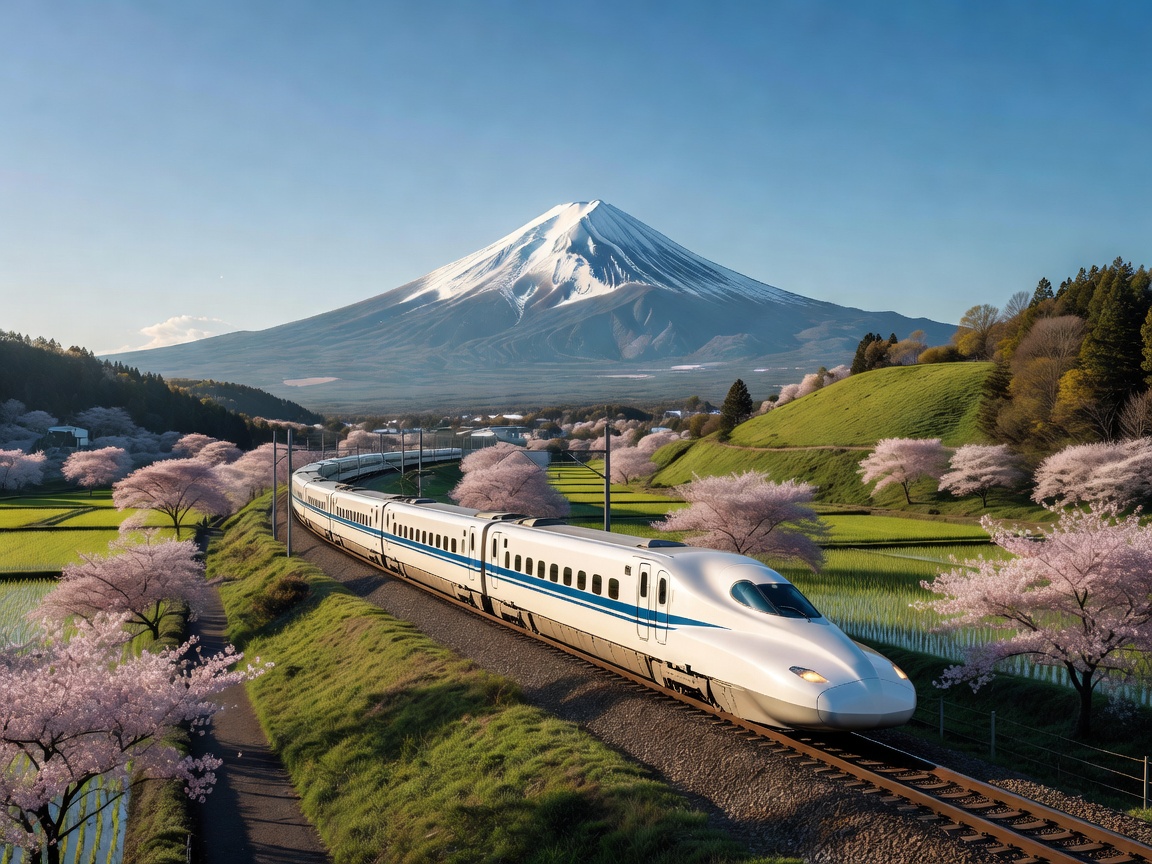
How to Reserve the Mt. Fuji View Seats (Seat E Strategy)
When travelling from Tokyo toward Kyoto or Osaka, Mount Fuji appears on the right side of the train near Shin-Fuji Station. For an unobstructed view, book Seat E in the 2+3 Ordinary Car layout, or Seat D in the 2+2 Green Car. Travelling eastbound to Tokyo, choose Seat A instead.
Tickets, Apps & Reservations
Reserved seats can be purchased at JR ticket offices, green ticket machines, or online via the SmartEX app, which allows booking up to one month in advance and boarding with an IC card or QR code. Non-reserved cars (typically cars 1–3) are available on most services, though they fill quickly at weekends and during Golden Week, Obon, and New Year.
Oversized Baggage Rules
Passengers carrying luggage with total dimensions (length + width + height) between 160 cm and 250 cm must reserve a "Seat with an Oversized Baggage Area" at the rear of specific cars. These reservations carry no extra fee, but failure to reserve incurs a 1,000 JPY charge on board. Items over 250 cm are not permitted.
Onboard Etiquette & Ekiben
Talk quietly, set phones to silent, and take calls in the vestibule between cars. Eating on board is completely acceptable — in fact the ekiben (station bento) is a cherished part of the journey. Look for regional specialities such as Kyoto's mackerel sushi or Tokyo's wagyu rice boxes before boarding.
Frequently Asked Questions
Is the JR Pass still worth it for the Tokaido Shinkansen?
For a simple Tokyo–Kyoto–Osaka round trip, point-to-point tickets are usually cheaper following the 2023 pass price increase. The pass pays off for longer loops that include Hiroshima, Kanazawa, or northern Japan.
Can I stand in a non-reserved car if all seats are taken?
Yes. Standing is permitted in non-reserved cars and vestibules, though reserving a seat is strongly recommended during holiday periods.
Is there Wi-Fi on board?
Free Wi-Fi is available on current N700S and N700A trainsets, and power outlets are provided at every seat on N700S trains.